
Investment
Long-Term vs Short-Term Rental in Lombok: Which Strategy Actually Works?
Higher nightly rates don't always mean higher returns. An honest comparison of short-term vs long-term rental strategies in Lombok — including a third option most investors overlook.
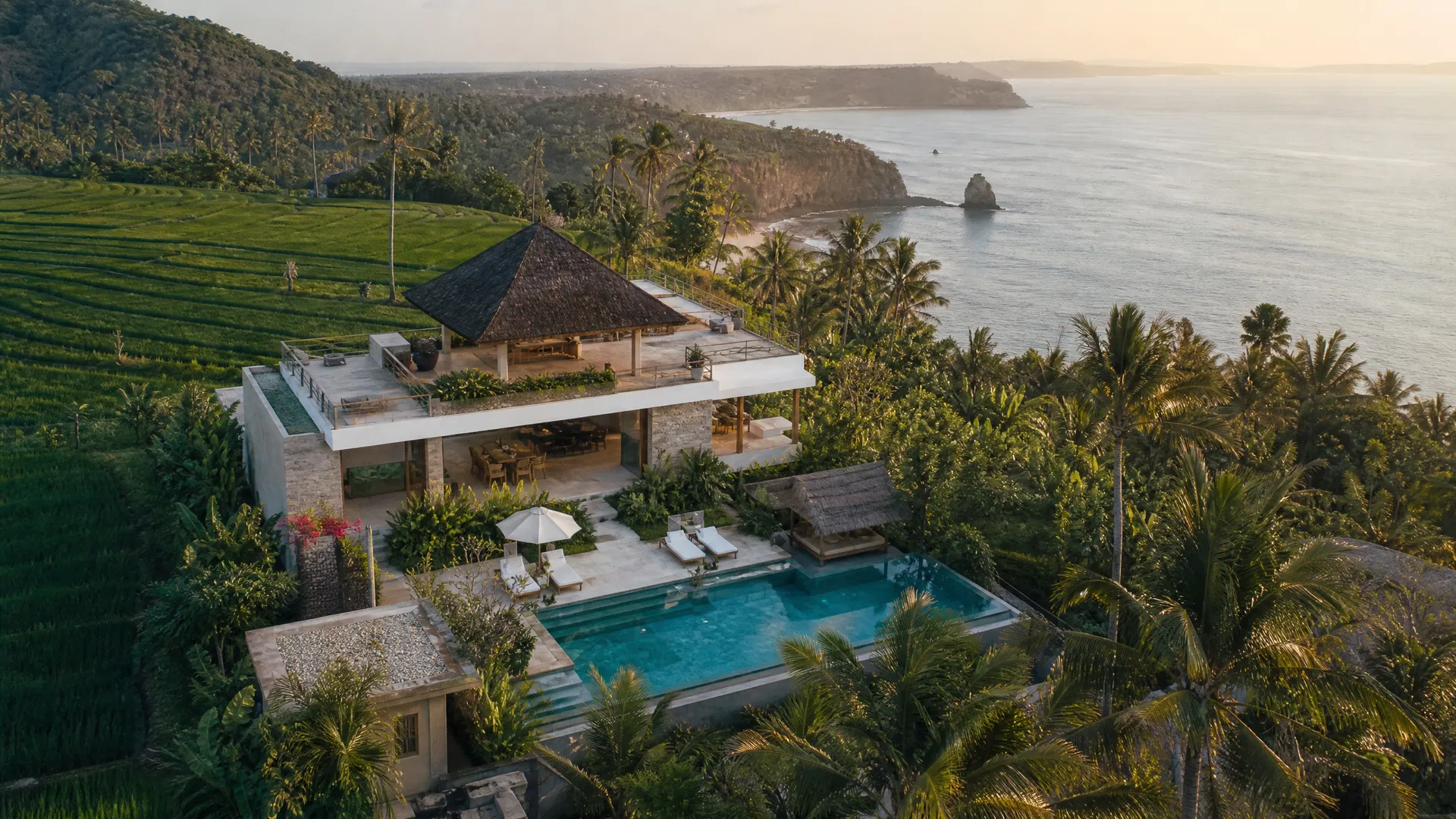
Long-Term vs Short-Term Rental in Lombok: Which Strategy Actually Works?
Higher nightly rates don't always mean higher returns. The right rental strategy depends on your location, your capital, and how involved you want to be.
If you're buying or building a villa in Lombok, one of the first real decisions you'll face isn't about design or finishing — it's about how you intend to rent it out.
Short-term rental (think Airbnb, nightly stays) and long-term rental (monthly or annual leases) are two completely different businesses. They attract different guests, carry different costs, demand different levels of management, and produce very different cash-flow patterns.
Many first-time investors assume short-term is automatically better because the nightly rates look impressive. In practice, the answer is rarely that simple. Below is an honest, ground-level comparison to help you decide.
The Core Difference
| Short-Term Rental | Long-Term Rental | |
|---|---|---|
| Typical guest | Tourists, surfers, couples, digital nomads (days to weeks) | Expats, remote workers, long-stay visitors (months to a year) |
| Income pattern | Higher per night, but variable | Lower per night, but stable and predictable |
| Occupancy risk | Seasonal — high season vs. low season swings | Low — locked in for the lease term |
| Management effort | High — cleaning, check-ins, listings, reviews | Low — one tenant, minimal turnover |
| Operating cost | High — management fees, utilities, maintenance, platform fees | Low — often paid by the tenant |
| Furnishing | Fully furnished, styled for photos | Furnished or semi-furnished, practical |
The simplest way to frame it: short-term rental is a hospitality business; long-term rental is a real estate income stream.
Short-Term Rental: The Upside and the Reality
Short-term rental is what most people picture when they imagine villa investment in Lombok — a beautiful property near the beach, booked out by tourists at premium nightly rates.
The upside is real. In prime tourism zones like Kuta, Selong Belanak, and Gerupuk, well-managed villas can command strong nightly rates during high season, and gross rental yields in Lombok's tourism areas are frequently reported in the higher single-to-double digits — meaningfully above many other markets.

But the reality has more moving parts:
- Occupancy is not guaranteed. Market data for Lombok's short-term rental segment shows occupancy commonly landing somewhere in the 45–75% range, depending heavily on location, property quality, and how professionally the listing is managed. The headline nightly rate means little if the calendar is half empty.
- Seasonality is significant. Lombok has a clear high season and low season. Strong months can carry the year — but only if you've planned for the quiet ones.
- Costs add up fast. Professional management typically takes a percentage of revenue. Add cleaning, utilities, maintenance, restocking, platform fees, and marketing, and the gap between gross and net income is wider than most investors expect.
- It's an active business. Even with a management company, short-term rental requires oversight, quality control, and reinvestment to stay competitive against newer listings.
Short-term rental can deliver the highest returns in Lombok — but those returns go to operators who treat it as a real business, not a passive asset.
Long-Term Rental: Quieter, But More Predictable
Long-term rental gets less attention because the numbers look less exciting on paper. A monthly lease will almost always show a lower headline figure than a fully-booked short-term calendar.
But it has clear structural advantages:
- Stable, predictable income. A signed lease means guaranteed cash flow for the term. No calendar gaps, no seasonal anxiety.
- Far lower management burden. One tenant instead of dozens of guests. No nightly turnover, no constant cleaning, no review management.
- Lower operating costs. Utilities and day-to-day running costs are often the tenant's responsibility. Maintenance is reduced because the property isn't cycling guests every few days.
- Growing demand base. Lombok's long-stay market — remote workers, expats, and extended-stay visitors — has been steadily expanding. These tenants want functional, comfortable, well-located homes, not resort-level styling.
The trade-off is straightforward: you accept a lower ceiling in exchange for a higher floor. For investors who want reliable returns without running a hospitality operation, that's often a very good deal.
So Which One Should You Choose?
There's no universal answer — but there are clear patterns.
Short-term rental tends to suit you if:
- Your property is in a prime tourist location
- You have (or will hire) professional management
- You're comfortable treating it as an active business
- You can absorb seasonal income swings
Long-term rental tends to suit you if:
- You want predictable, low-effort income
- Your property is slightly outside the prime tourist core
- You prefer lower operating costs and less involvement
- You value occupancy stability over peak revenue
And for many investors, the smartest answer is a blend. A villa can run short-term through high season to capture peak rates, then shift to monthly long-term tenants through the quieter months to keep cash flow steady. Designing for that flexibility from the start — practical layouts, durable finishes, the right unit size — is what makes it possible.
A Third Option: Lease a Local House and Renovate It
Beyond building from scratch, there's a third approach that's gaining traction in Lombok — and one that's worth understanding if you're looking for a lower entry point or a faster path to rental income.

The model works like this: an investor leases an existing local house on a long-term basis (typically 5–10 years), renovates it to a rental-ready standard, and then operates it as either a short-term or long-term rental for the duration of the lease.
The appeal is clear: - Lower upfront capital — you're not buying land or building from zero - Faster to market — renovation is quicker than new construction - Flexibility — test a location before committing to a full purchase
But it comes with its own set of considerations: - The lease terms, renewal rights, and renovation clauses must be clearly documented — ambiguity here creates serious risk - Renovation scope needs to be calibrated to the remaining lease term (over-investing in a 5-year lease rarely makes financial sense) - The existing structure may have limitations that a new build wouldn't
When done carefully, with the right legal structure and a realistic renovation budget, this approach can deliver solid returns — particularly for investors who want to enter the Lombok market without a large initial outlay.
PT. SAN BADA DEVELOPMENT works with investors on this model as well. We can assist with renovation design, construction management, and helping you understand what a realistic scope and budget looks like for a leased property — so the numbers actually work before you commit.
The Decision Starts Before You Build
Here's the part most investors miss: your rental strategy should influence the property itself.
A villa optimized for short-term tourism (dramatic design, pool-centric, photogenic) is not always the same villa that performs best for long-term tenants (practical layout, easy maintenance, sensible running costs). Unit size, number of bedrooms, location, and finishing level should all be chosen with the rental model in mind — ideally before the first drawing is finalized.
This is exactly why the rental question deserves attention early. The right strategy, decided up front, shapes a better-performing asset.
How San Bada Approaches It
At PT. SAN BADA DEVELOPMENT, we don't treat rental strategy as an afterthought. When we work with investors on land, design, and construction in Lombok, we factor in the intended rental model from the beginning — because the goal isn't just to build a villa, it's to build an asset that actually performs.
Whether you're aiming for short-term tourism income, stable long-term yield, a flexible hybrid, or a lease-and-renovate entry into the market — the property should be designed around that goal from the start, not retrofitted to it later.
If you're weighing your options for a villa investment in Lombok, we're happy to talk through the numbers and the realistic operating picture for your specific plan.
Considering a rental-focused villa in Lombok? Contact us to discuss the right strategy and structure for your investment.